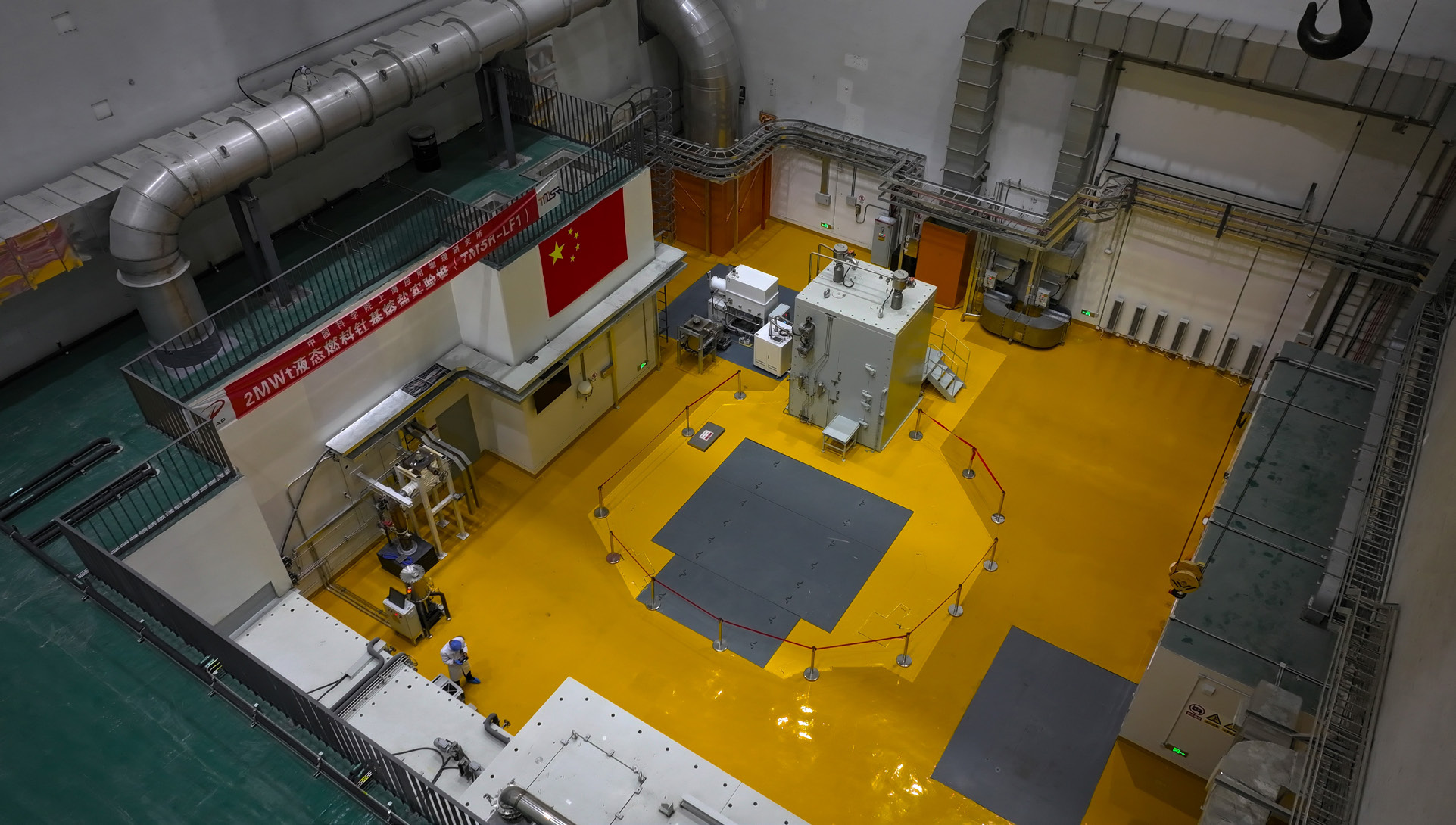
The molten salt reactors (MSRs), which use high-temperature molten salt as the coolant, belong to the fourth-generation advanced nuclear energy system. MSRs are internationally acknowledged as the most suitable reactor type for thorium fuel utilization, boasting advantages including inherent safety, atmospheric pressure operation, water-free cooling, and high-temperature heat output.
This research addressed fundamental theoretical bottlenecks in the integrated design of the reactor core and primary loop, establishing a multi-physics design methodology that enables synergistic optimization of structural integrity and heat transfer efficiency. It elucidated the in-service performance and microstructural evolution mechanisms of critical structural materials under extreme conditions, developing robust technical capabilities for property regulation and precision fabrication. By revealing the intrinsic interaction mechanisms between fuel media and structural materials, this research formulated integrated strategies for fuel chemistry management and corrosion inhibition. These efforts culminated in the successful construction of the liquid-fueled thorium-based molten salt experimental reactor (TMSR-LF1), and subsequently a landmark proof-of-principle experiment demonstrating thorium-to-uranium conversion, providing direct evidence of key nuclide evolution and validating the scientific feasibility of this innovative fuel cycle pathway.
This milestone achievement constitutes a key juncture in the three-step development strategy for thorium-based molten salt reactors “experimental reactor – research reactor – demonstration reactor”. It lays the foundation for China to take the lead in the industrial application of TMSRs and the large-scale utilization of thorium resources, further consolidating China’s leading position in the global research on molten salt reactor systems.
Main supporting institution: Shanghai Institute of Applied Physics, CAS