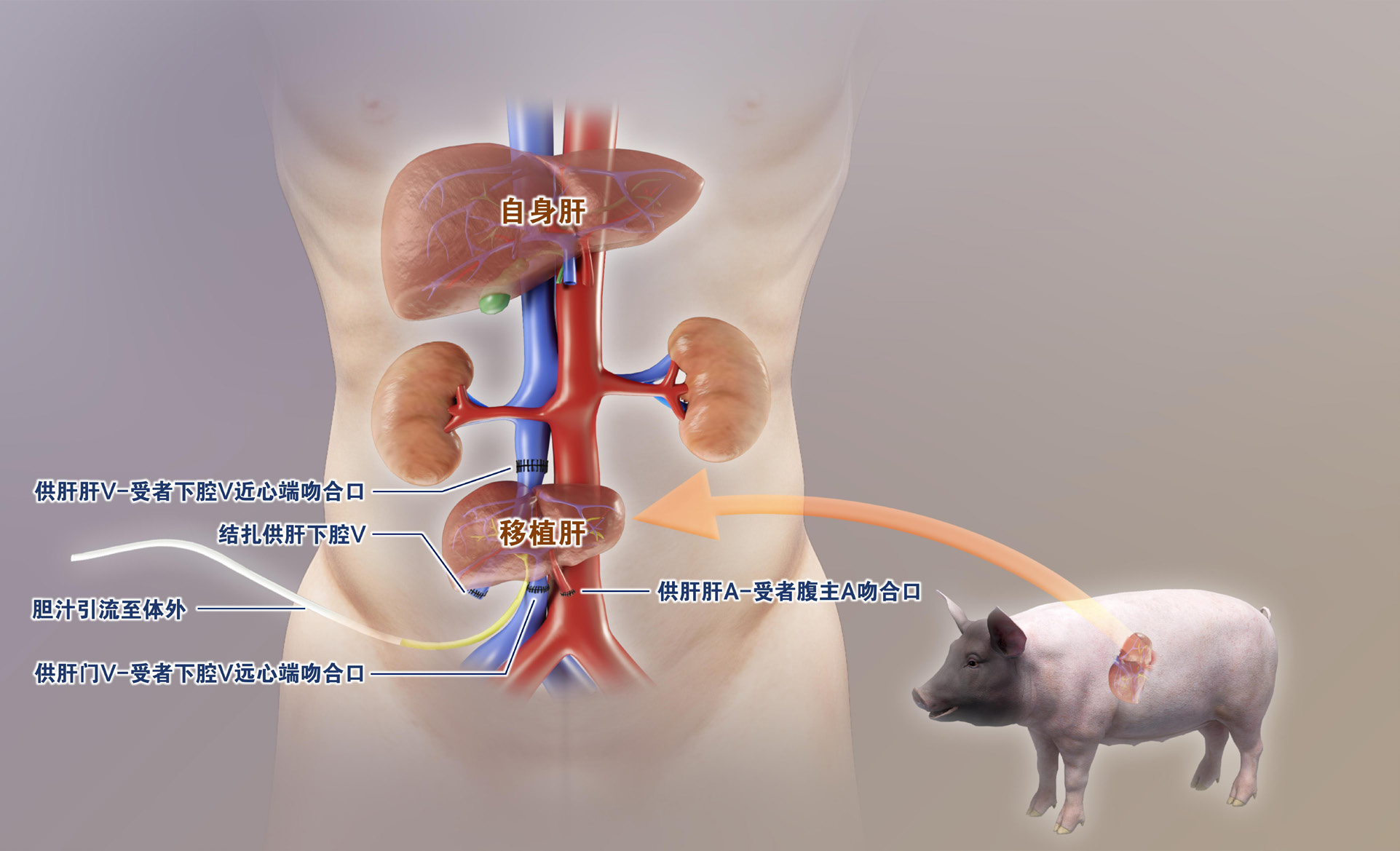
Organ shortage represents a critical bottleneck constraining the development of organ transplantation, while xenotransplantation serves as a pivotal approach to address this shortage. This research achieved a major breakthrough by successfully transplanting a genetically modified pig liver into a human recipient.
To overcome barriers including immunological rejection and physiological incompatibility in xenotransplantation, a six-gene editing strategy was used for donor pigs: knockout of three porcine antigen genes (GGTA1, B4GALNT2, and CMAH) to prevent hyperacute rejection; insertion of two human complement regulatory protein genes (hCD46 and hCD55) to inhibit complement activation-mediated humoral immune rejection; and insertion of one human thrombomodulin gene (hTBM) to ameliorate coagulation disorders. Concurrently, building upon the standard triple immunosuppressive regimen (tacrolimus, mycophenolate mofetil, and methylprednisolone) used in allotransplantation, a targeted “seven-drug immunosuppression” protocol was developed specifically for xenotransplantation: the addition of anti-thymocyte globulin and anti-CD20 antibody to suppress cellular immune rejection; anti-C5 antibody to reduce complement-mediated cytotoxicity; and anti-TNF-α antibody to attenuate systemic inflammatory responses. This research employed a heterotopic auxiliary liver transplantation technique, preserving the recipient's native liver to minimize surgical trauma, reduce operative risks, and facilitate future applications as a bridge therapy.
This research represents a significant clinical breakthrough in pig liver xenotransplantation, providing crucial theoretical foundation and technical support for the advancement of cross-species organ transplantation
Main contributors: DOU Kefeng, WANG Lin, DONG Hailong
Main supporting institution: Fourth Military Medical University