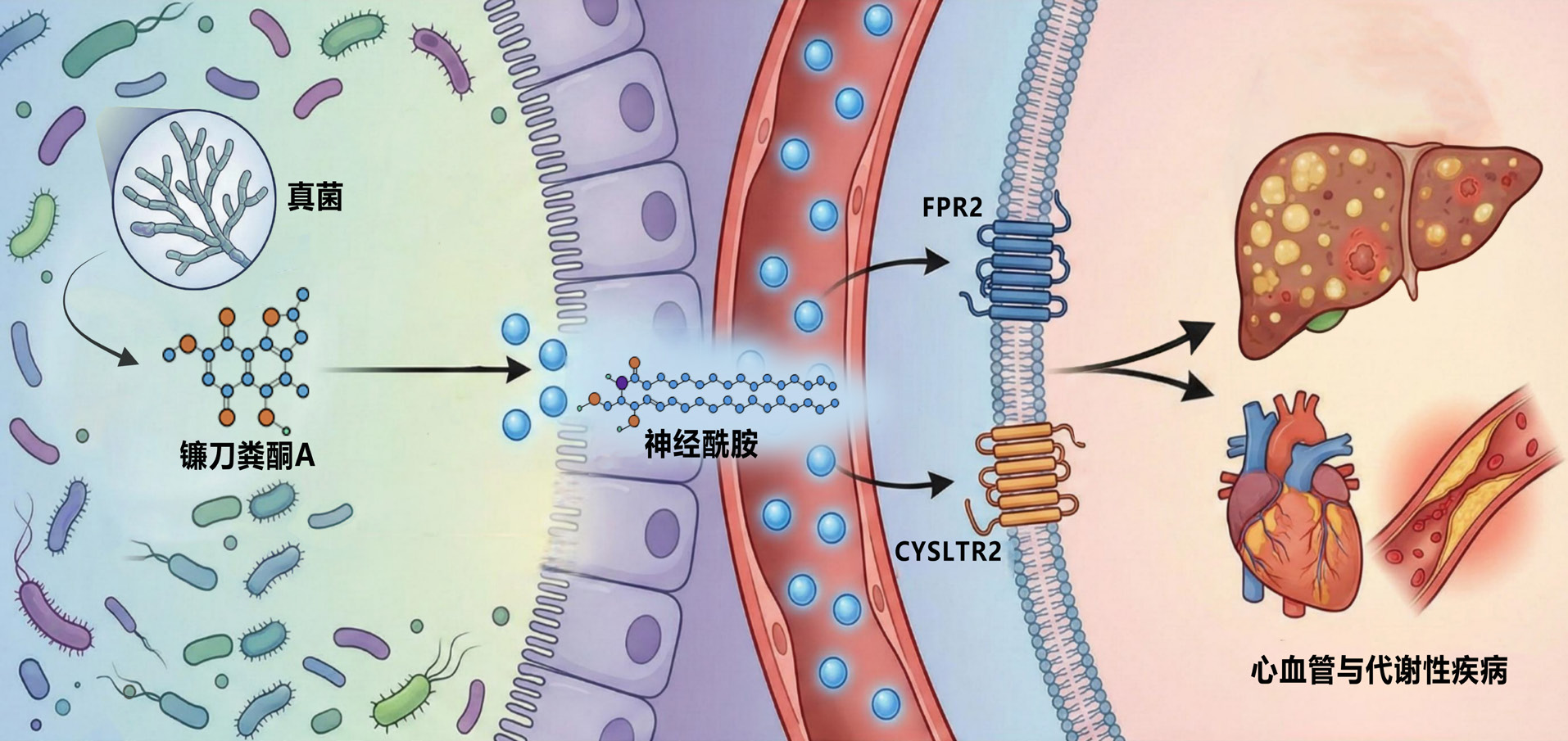
Cardiovascular and metabolic diseases pose a serious threat to human health worldwide. The traditional etiological framework centered on high cholesterol fails to fully explain the pathogenesis and progression of these diseases, leaving a significant number of patients with residual risk. Recent studies have identified ceramide, an endogenous host lipid, as an independent risk factor for cardiovascular and metabolic diseases. However, since the ceramide was discovered in 1884, its receptors and regulatory mechanisms have remained an unsolved mystery for over a century, severely hindering research into targeted interventions.
This research is conducted from the perspectives of receptor recognition, metabolic regulation, and disease intervention. For the first time, the research identified the ceramide receptors FPR2 and CYSLTR2 and revealed the molecular mechanisms by which ceramide exacerbates cardiovascular and metabolic diseases. The research systematically clarified that ceramide serves as a key messenger for the host to perceive fungal enzymes and their metabolites in the gut, and discovered that FF-C1, a novel secondary metabolite produced by gut fungi, regulates ceramide levels by inhibiting the intestinal ceramide synthase CerS6, thereby improving cardiovascular and metabolic diseases.
This research solves the century-old mystery of ceramide, revolutionizes the traditional cholesterol-centered therapeutic framework, and breaks through the core bottleneck in the development of drugs for cardiovascular and metabolic diseases.
Main contributors: JIANG Changtao, KONG Wei, SUN Jinpeng, QIAO Jie, WANG Kai, YU Xiao, ZHENG Jingang, ZHENG Minghua
Main supporting institutions: Peking University; Shandong University; China-Japan Friendship Hospital; Wenzhou Medical University